Quantum Computing’s Potential to Reshape Artificial Intelligence
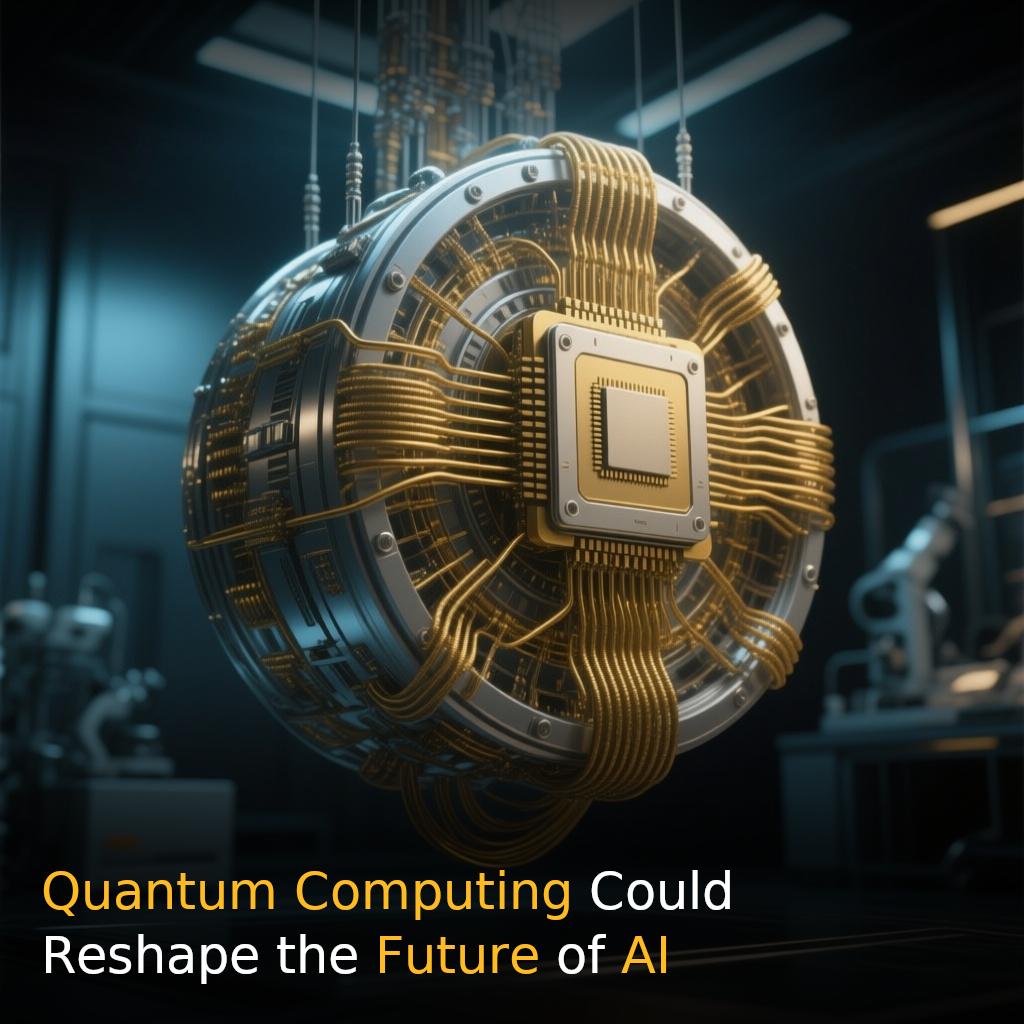
Quantum computers represent a fundamentally different approach to computation, leveraging the principles of quantum mechanics to process information in ways that classical computers cannot. Their future impact on artificial intelligence (AI) is a subject of intense speculation and research, with the potential to revolutionize the field.
Traditional computers use bits, which represent either a 0 or a 1. Quantum computers, however, use qubits, which can exist in a state of superposition, representing 0, 1, or any proportion of both simultaneously. This property, along with other quantum phenomena like entanglement, allows quantum computers to explore a vast number of possibilities at once.
This capability is particularly relevant to AI, which often involves solving complex optimization problems and processing massive datasets. Machine learning, a core component of AI, relies on finding patterns and making predictions from data. Quantum computing could potentially accelerate these processes exponentially.
How Quantum Computing Could Transform AI
The intersection of quantum computing and AI could lead to significant advancements in several key areas:
- Accelerated Machine Learning: Quantum algorithms could dramatically speed up the training of machine learning models, enabling them to learn from far larger datasets and identify more complex patterns than is currently possible.
- Enhanced Optimization: Many AI problems, such as route planning, resource allocation, and supply chain management, are essentially optimization problems. Quantum computers are expected to excel at finding optimal solutions among a vast number of possibilities.
- New AI Models: Quantum computing could enable the development of entirely new types of AI models that are not feasible on classical hardware, potentially leading to breakthroughs in areas like drug discovery, materials science, and financial modeling.
Challenges and the Road Ahead
Despite the immense potential, significant challenges remain before quantum computers can have a widespread impact on AI. Current quantum computers are still in their infancy, with limited qubit counts and high error rates. Building stable, fault-tolerant quantum computers is a major engineering hurdle.
Furthermore, developing quantum algorithms that can be effectively applied to AI problems is an active area of research. It is likely that the first practical applications will be in specialized domains, with a gradual integration with classical computing systems rather than a complete replacement.
The future impact of quantum computing on AI is expected to be profound, but it will take time. As the technology matures, it holds the promise of unlocking new capabilities in artificial intelligence that we are only beginning to imagine.
#QuantumComputing, #ArtificialIntelligence, #FutureTech, #MachineLearning, #Qubits