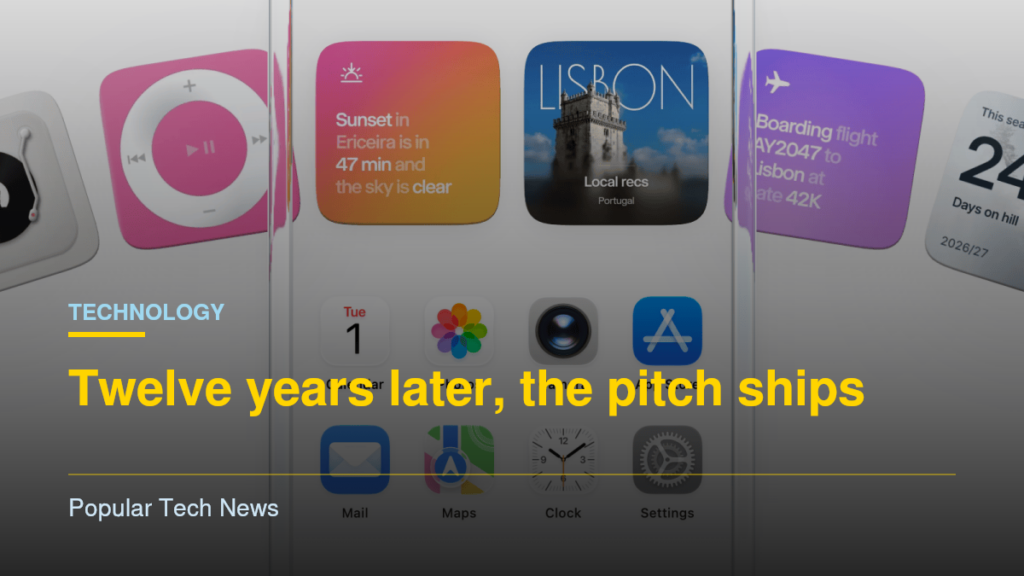
Twelve years after Eugenia Kuyda stood on the TechCrunch Disrupt stage to demo IO, a conversational lifestyle concierge built by her startup Luka, the technology has finally caught up with the pitch. IO predated the deep learning breakthroughs that produced today's large language models, but it worked well enough to be called "pretty magical" by Kuyda in a recent interview — while she conceded it was nowhere near what is possible now. On Monday, Kuyda officially launched Wabi for all users, a personal AI assistant that functions as a messenger app and lets people run multiple agentic threads dedicated to different tasks and long-term goals.
From Luka to Replika to Wabi
Luka eventually became Replika, the AI companion company that found a large audience by offering users a chatbot to talk to. Kuyda left her role as Replika's CEO last year and founded Wabi. The new product is a pivot from Wabi's initial launch, which came with a $20 million pre-seed round and was framed as a social platform where users could create mini apps with prompts and share them with friends. Over the past year, the team concluded that people like personal software rather than one-size-fits-all App Store solutions, but they may not want to spend time building it themselves. In Wabi 2.0, the agent decides what apps to build. When a user connects the assistant to their email, it automatically spins up a set of threads and apps, and users can request custom apps or start new threads from there.
Threads, apps and a multiplayer bet
Kuyda argues that Wabi does what new rivals such as Muse and Instinct do, but adds a layer of purpose-built apps that help users accomplish more. The bigger differentiator is the multi-threaded, multiplayer design. Single-thread assistants, she says, get worse over time because everything accumulates in one endless conversation, burying users in information. AI researchers have noted that longer chatbot conversations are more likely to produce hallucinations, lose track of context, or drift into responses that safety guardrails would otherwise block. Wabi instead keeps separate threads for separate goals, and those threads can be shared as group chats. In one shared thread with her boyfriend, Kuyda has a live music tracker, an app that asks a daily question about their relationship, a running restaurant list, shared calendar events, and a reading list with suggestions. A family thread tracks her daughter's schedule, surfaces nearby kid-friendly events, and quizzes her daughter on Japanese.
Scoped sharing and privacy controls
Sharing is granular. Within any shared chat, users decide how much to expose, from email and calendar data to bank account details, and access is scoped to individual chats. Everyone in a chat can see when someone's personal information is requested, so a partner can ask Wabi whether Kuyda is free next Thursday or whether she bought tickets without exposing unrelated data. Wabi is SOC 2 compliant, meaning its data security controls have been independently audited, and it runs entirely in the cloud with most user data stored in the U.S. Kuyda frames the social angle as a continuation of Replika's mission: Replika worked on AI that makes people feel less lonely, and Wabi applies a similar idea to bringing people together in real life, whether that means seeing a concert or choosing the next book to read as a pair.
Business model still open
Wabi is free for now, and the company has not settled on a business model. Kuyda said Wabi is in talks to raise more funds. The launch places it in an increasingly crowded field of personal AI assistants that promise to manage inboxes, find flight deals and handle everyday coordination. Kuyda's argument is that the winning design is not a single omniscient chat but a set of scoped, shareable threads with small apps the agent assembles on request, an architecture that keeps context manageable and puts people in the same conversation rather than each talking to a separate AI. Whether users adopt that model, and whether Wabi can turn it into revenue, is the next test of a vision that has been waiting twelve years for the underlying models to arrive.