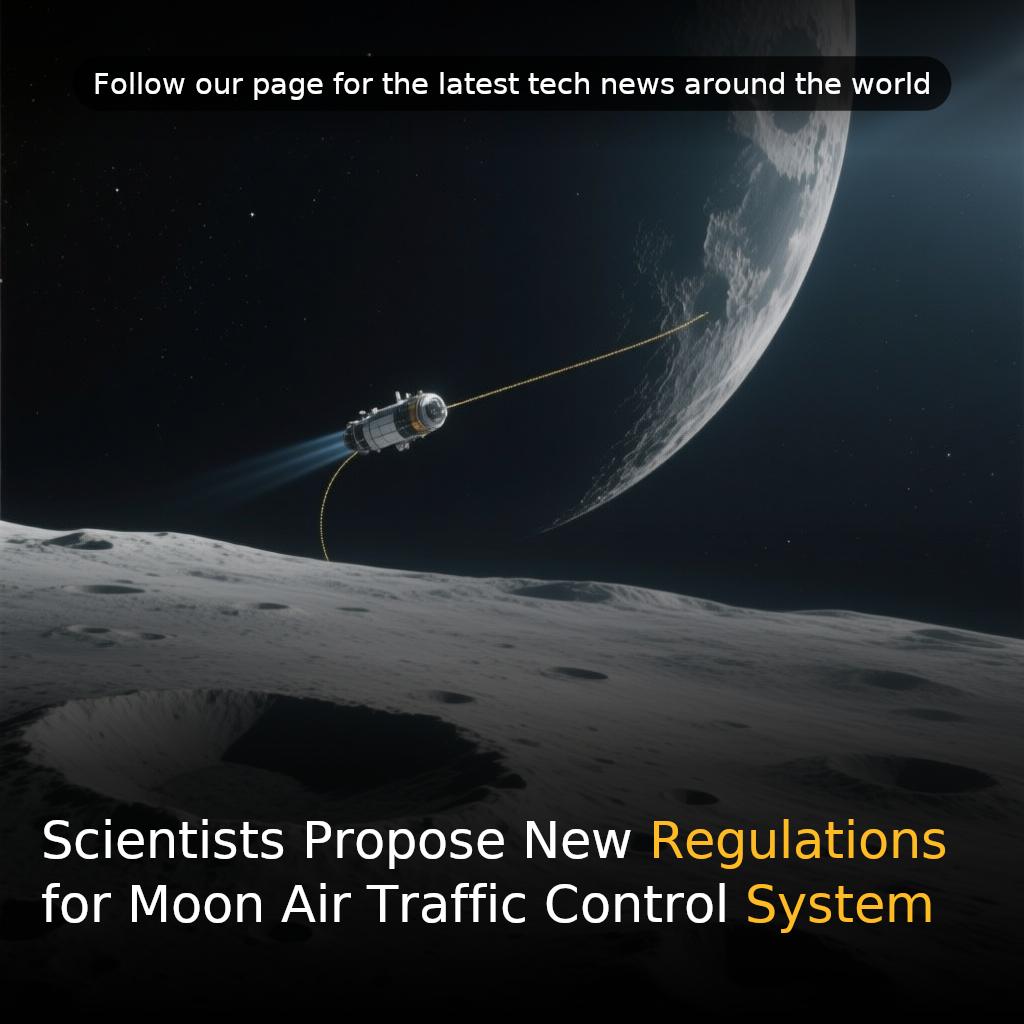
Scientists have proposed a new set of regulations designed to manage future lunar space stations and the growing volume of space traffic around the Moon. These rules are being described as the foundation for the Moon’s first air traffic control system.
Why Lunar Traffic Management Is Needed
Experts say that over the next two decades, permanent human habitats could be established on the Moon. With an increase in space missions, the number of spacecraft, cargo, and other activities there may grow significantly.
In that scenario, traffic management around the Moon would become necessary, similar to how it is on Earth. The proposed regulations aim to address this emerging need before congestion becomes a problem.
NASA and the Gateway Project
NASA and other agencies are working on plans for a permanent presence on the Moon. A key part of these efforts is NASA’s Gateway project, which is intended to serve as a space station for spacecraft movement and landings around the Moon in the future. The Gateway will likely be a central hub for lunar operations, making coordinated traffic management even more critical.
Mathematical Principles for Safe Routes
The new proposed rules emphasize using mathematical principles to determine safe routes for spacecraft. The goal of these mathematical routes is to keep the increasing traffic between Earth, the Moon, and deep space safe and organized.
By applying these principles, the regulations aim to prevent collisions and ensure efficient movement in the lunar environment. This approach mirrors the logic behind Earth-based air traffic control but adapted for the unique challenges of space.
As NASA and other entities push forward with lunar exploration, these proposed rules could become the standard for how humanity operates around the Moon.