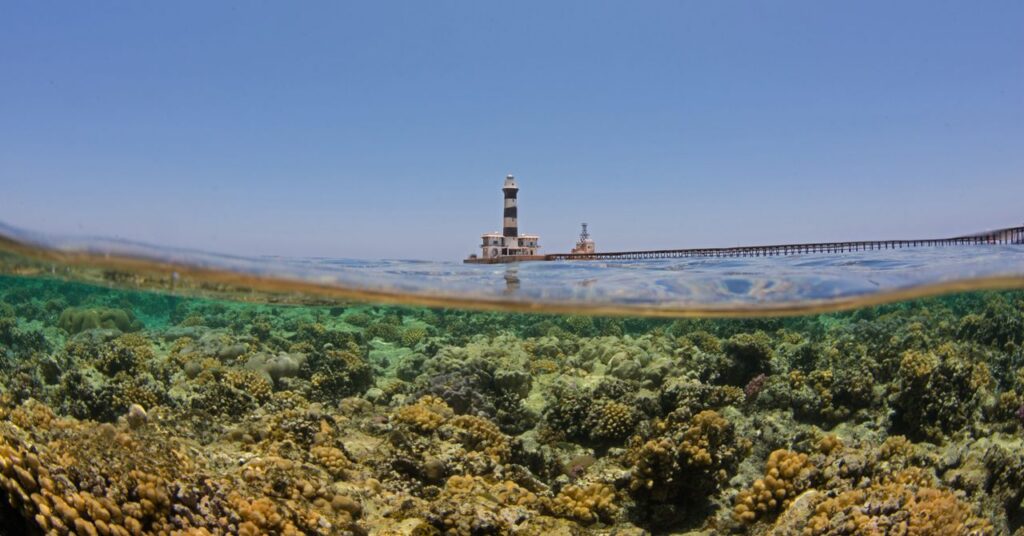
Egypt's Red Sea corals have long been held up as a rare beacon of hope amid global reef decline, weathering rising ocean temperatures with unusual ease. But heat waves in the summers of 2023 and 2024 have finally left their mark, with a survey led by Mahmoud Hanafy, a professor of marine biology at Suez Canal University and consultant for the Hurghada Environmental Protection and Conservation Association (HEPCA), documenting bleaching throughout the Red Sea in 2024. In the northern areas, less than a tenth of surveyed coral colonies were affected; further south, bleaching took out half of them.
A Natural Laboratory Under Stress
The finding matters because these reefs have been described as "super corals" for their unparalleled hardiness. Some scientists have even predicted that Egypt's northern reefs could become the world's last remaining corals if oceans continue to warm. Now the question is not only how much heat they can withstand, but what has shielded them until recently—and whether that shield will hold.
Bleaching occurs when overly warm water causes the algae living within coral polyps to produce toxic substances. The corals expel the algae as a defense, but because those microscopic organisms are the corals' primary food source, the result is starvation. Reefs cover less than 1 percent of the seafloor yet support at least 25 percent of marine species, according to the United Nations Environment Program, so their decline ripples across entire ecosystems.
Two Competing Explanations
For years, northern Red Sea reefs remained stable as temperatures climbed elsewhere. Eslam Osman, a marine ecologist at King Abdullah University of Science and Technology (KAUST), points to evolutionary history: corals are believed to have entered the Red Sea through the Bab al-Mandab Strait between modern-day Djibouti and Yemen, and the especially warm waters there acted as a natural filter. Heat-tolerant species and genotypes survived and spread north into cooler waters.
Hanafy is unconvinced that evolution is the main story. He emphasizes water circulation instead. The northern Red Sea experiences shifts in current direction that can create vertical mixing, pulling cooler water from the deep toward the surface and buffering corals even when air temperatures soar. That distinction is critical: if the resilience comes from circulation rather than coral biology, the reefs may be more fragile than they appear. During the 2024 heat wave, the sea stayed unusually calm for about six weeks, weakening the circulation Hanafy believes normally protects the reefs. HEPCA's report names weak water circulation as a contributing factor, and exceptionally low tides in July 2024 may have intensified stress on shallow communities.
Osman accepts that calm seas could have worsened bleaching but argues the circulation theory needs more research. "I'm not denying the possibility of that," he says. "But what I'm saying is, the temperature was the main issue." The two explanations are not mutually exclusive, but understanding their relative weight would help scientists gauge how vulnerable the reefs are to future heat waves.
Signs of Recovery and New Protections
There is encouraging news. HEPCA's preliminary estimates a year after the bleaching event put recovery rates at 75 to 88 percent, depending on species and location—a far stronger rebound than seen in many reefs elsewhere, which are only beginning to recover, if at all. The Egyptian government has also designated new protected areas and partnered with the United Nations Development Program and the Global Fund for Coral Reefs on conservation and sustainable management.
Osman welcomes such initiatives but stresses that conservation requires sustained support. "We definitely need more stable financial resources, because conservation is not a single-year act," he says. For Hanafy, the future of Egypt's reefs also hinges on whether climate change alters the circulation that may be keeping the corals alive.
Whatever explains their unusual resilience, local conservation cannot halt ocean warming. "Therefore, the key is to reduce carbon dioxide and greenhouse gases. Any other solution will just buy time," Hanafy says.